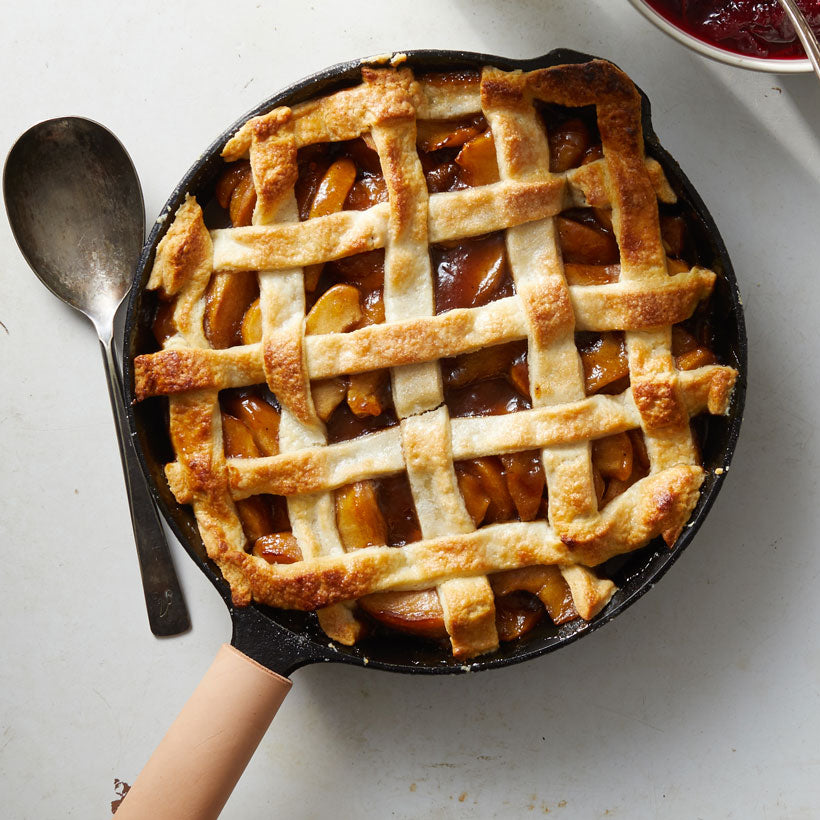
There's something wonderfully unfussy about baking pie in cast iron. No delicate ceramic dish to worry about. No flimsy aluminum pan bending as you transfer it to the oven. Just one skillet that can handle juicy fruit fillings, buttery crusts, bubbling edges, and whatever else the season throws at it.
And perhaps most importantly: cast iron makes really, really good pie. The same qualities that make cast iron great for searing and roasting are exactly what make it excel at baking. It retains heat exceptionally well, which helps create golden crusts, bubbling fillings, and beautifully caramelized edges.
Over the years we've baked all kinds of pies in our skillets:
Why Cast Iron?
Better Bottom Crusts
-
The biggest advantage is heat retention. Unlike thinner pie tins, cast iron stores heat and releases it gradually, which means the bottom crust starts baking immediately and continues browning evenly throughout the bake. The result is a crust that's crisp and golden rather than pale or soggy. If you've ever lifted a slice of pie only to have the bottom crust collapse under the weight of the filling, cast iron is often the solution.
Even Baking
-
Cast iron heats slowly but evenly. Fruit pies bubble consistently from edge to center, custard pies set gently without dramatic temperature swings, and savory pies brown beautifully across the surface. Once the skillet is hot, it stays hot, giving you more predictable results and fewer surprises.
It Goes Straight to the Table
-
The pie comes straight out of the oven and directly onto the table. No transferring to a serving dish. No worrying about breaking a delicate pie plate or losing a piece during the move. Just a beautiful cast iron skillet filled with something homemade, ready to be sliced and shared. For us, that's part of the magic of pie in cast iron.